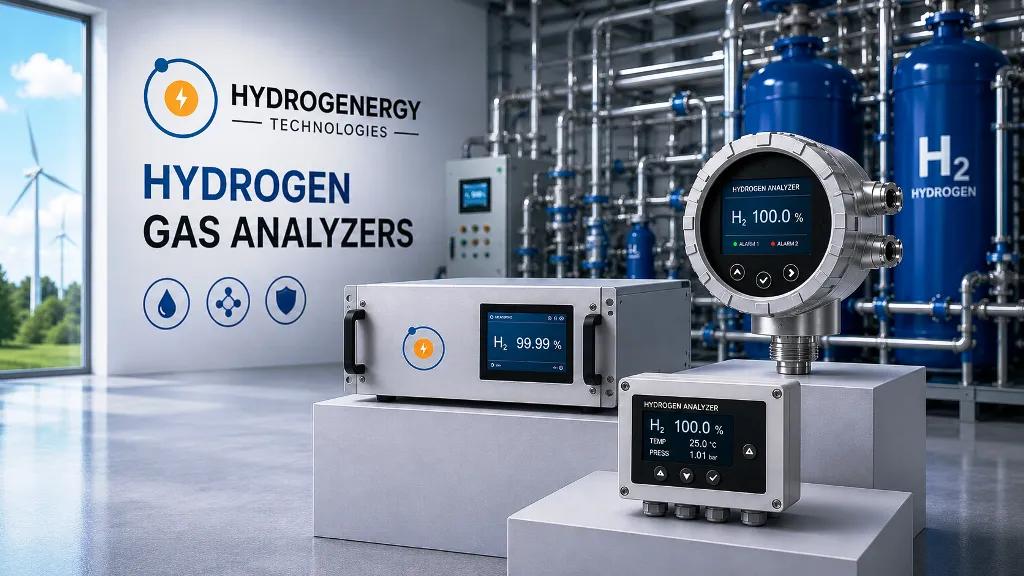
Product Types
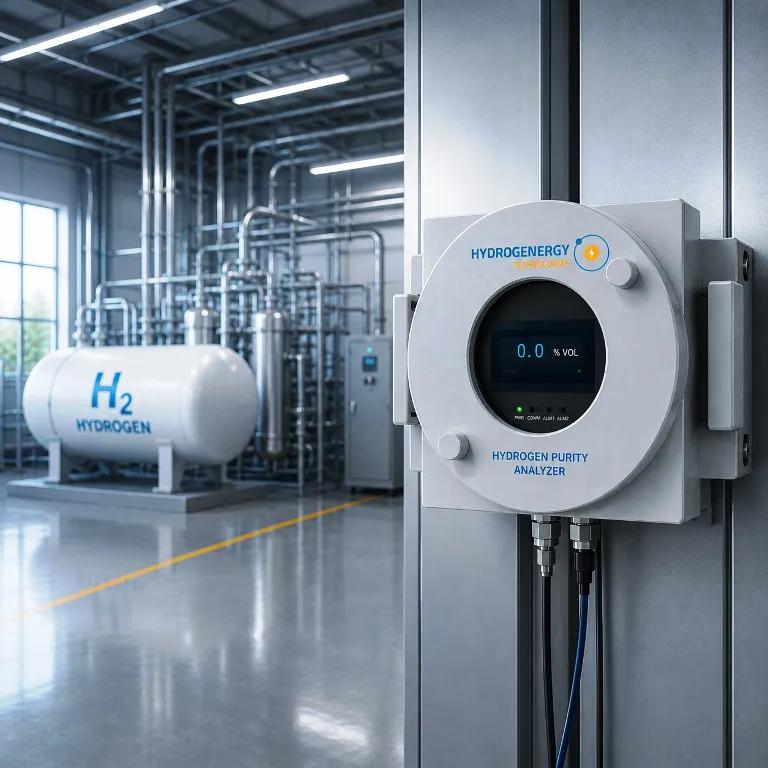
What is a Hydrogen Purity Analyzer?
Know hydrogen purity. Protect your system.
A hydrogen purity analyzer is an instrument that measures the concentration of hydrogen in a gas stream — or conversely, the level of impurities present — to verify that the gas meets the required quality specification for its intended application. Hydrogen purity is not a single fixed requirement: it varies significantly depending on whether the hydrogen is being used in a fuel cell stack, a hydrogen vehicle dispenser, an industrial process, or an analytical instrument.
PEM fuel cells are particularly sensitive to gas quality. Contaminants including oxygen, nitrogen, carbon monoxide, carbon dioxide, sulphur compounds and moisture can poison the platinum catalyst in the membrane electrode assembly, causing irreversible performance degradation. ISO 14687 defines purity grades for hydrogen fuel — from Grade C (99.9%) through to Grade D (99.97%) for fuel cell vehicles — with individual contaminant limits that a simple purity percentage alone does not capture.
Hydrogen purity analyzers measure total hydrogen concentration using thermal conductivity detection (TCD), electrochemical sensing, or gas chromatography-based methods depending on the required accuracy, concentration range and contaminants of interest. They are deployed at electrolyzer and hydrogen generator outlets to verify production quality, at compression and storage interfaces, at fuelling station dispensers for compliance verification, and inline in industrial hydrogen supply systems. Hydrogenergy supplies hydrogen purity analyzers across fixed, portable and inline configurations for the full range of hydrogen quality measurement requirements.