H₂ Products

All Products
Electrolyzers
Fuel Cells
H₂ Leak Detectors
Dew Point Meters
Hydrogen Purity Analyzers
Mass Flow Controllers
Digital Pressure Gauges
MEA & Materials

Can't find what you need? We source custom components.

Custom Request →
MEA & Materials
H₂ Products · MEA & Materials

MEA & Hydrogen System Materials

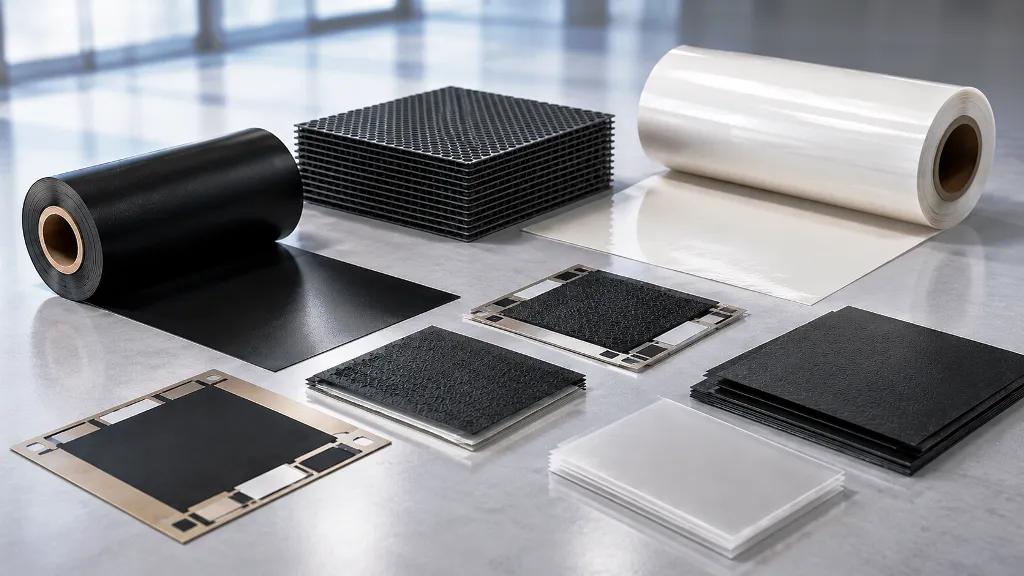
MEA · GDL · CCM · Bipolar Plates

Core electrochemical components and materials for PEM fuel cells and electrolyzers. Membrane electrode assemblies, gas diffusion layers, catalyst coated membranes and bipolar plates — for stack development, research, performance testing and OEM manufacturing.

What are MEA & Hydrogen System Materials?

The components inside every stack.

The performance of a PEM fuel cell or electrolyzer stack is determined by the quality and specification of the electrochemical components assembled within it. At the core of every stack is the membrane electrode assembly (MEA) — a precisely engineered multilayer structure that is the site of all electrochemical activity. Around the MEA, gas diffusion layers manage reactant distribution and water transport, catalyst coated membranes define the electrochemical active area, and bipolar plates distribute gases, conduct current and manage heat across the stack.

These materials are not commodity components. Each has a defined specification — membrane thickness, catalyst loading, ionomer content, porosity, electrical conductivity, corrosion resistance — that directly determines stack efficiency, power density, durability and operating lifetime. For stack developers, OEMs and research groups characterising new cell designs, access to well-specified, consistent electrochemical materials from a reliable supply source is as important as the test equipment used to evaluate them.

MEA and stack materials are consumed in the normal course of stack operation and must be replaced when performance degrades below acceptable limits. They are also required in quantity during stack development and manufacturing scale-up, where multiple design iterations are evaluated before a final specification is fixed. Hydrogenergy supplies MEAs, GDLs, CCMs and bipolar plates for PEM fuel cell and electrolyzer applications — with full material specifications and technical support for stack integration and performance optimisation.

Which mea & material is right for you?

Complete drop-in electrochemical assembly for PEM fuel cell stack replacement or build
MEA — fully assembled membrane electrode assembly with GDL, catalyst layers and membrane integrated
Membrane with catalyst layers only — for custom GDL selection or compression testing
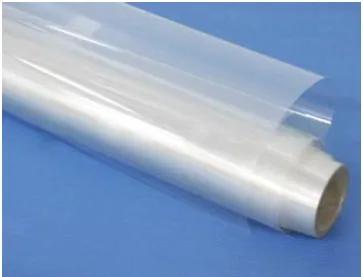
CCM (Catalyst Coated Membrane) — membrane and catalyst layers without GDL, for flexible stack assembly
Gas diffusion layer for custom MEA assembly or GDL performance evaluation
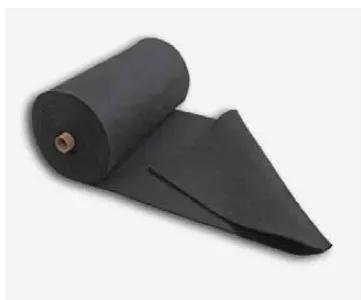
GDL (Gas Diffusion Layer) — carbon paper or carbon cloth substrate with or without microporous layer
Bipolar plates for new stack build, plate replacement or flow field design evaluation
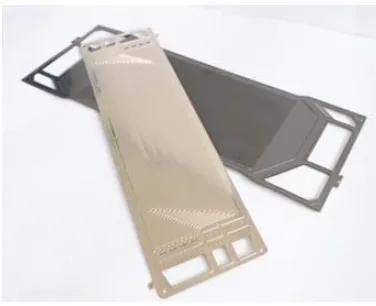
Bipolar Plates — graphite, coated metal or composite, available in standard and custom geometries
MEA or CCM for electrolyzer stack rather than fuel cell stack
Electrolyzer MEA or CCM — specified for water electrolysis conditions, higher current density, membrane durability
Small quantity for research, stack prototyping or single-cell testing
MEA or CCM in research quantities — contact Hydrogenergy for minimum order and available specifications

Frequently asked questions

What is a membrane electrode assembly (MEA) and what does it contain?
A membrane electrode assembly is the central electrochemical component of a PEM fuel cell or electrolyzer. It consists of a proton exchange membrane — typically Nafion or similar ionomer — coated on both faces with catalyst layers containing platinum or platinum-group metal catalysts, bonded to gas diffusion layers on each side. The complete five-layer structure (GDL / catalyst layer / membrane / catalyst layer / GDL) forms the MEA. All electrochemical reactions — hydrogen oxidation at the anode and oxygen reduction at the cathode in a fuel cell — occur within this assembly.
What is the difference between an MEA and a CCM?
A catalyst coated membrane (CCM) consists of the proton exchange membrane with catalyst layers applied to both faces — but without the gas diffusion layers. A full MEA adds GDLs bonded or pressed against each face of the CCM. CCMs are used when the researcher or manufacturer wants to select, evaluate or optimise the GDL independently from the membrane and catalyst specification. Full MEAs are used when a complete, ready-to-assemble electrochemical unit is required for stack build or replacement.
What is a gas diffusion layer and why does it matter?
A gas diffusion layer is a porous, electrically conductive sheet — typically carbon paper or carbon cloth — positioned between the bipolar plate and the catalyst layer in a PEM cell. Its functions are to distribute reactant gases uniformly across the catalyst surface, conduct electrons between the catalyst layer and the bipolar plate, and manage water transport — removing product water from the cathode in a fuel cell, or managing liquid water in an electrolyzer. GDL porosity, thickness, hydrophobicity and microporous layer specification all affect stack performance and durability.
What materials are bipolar plates made from?
Bipolar plates in PEM fuel cells and electrolyzers are manufactured from graphite, coated metals (typically stainless steel or titanium with a corrosion-resistant and conductive surface coating), or composite materials combining graphite with polymer binders. Graphite plates offer excellent corrosion resistance and conductivity but are brittle and difficult to manufacture at thin gauges. Metal plates can be stamped to thin profiles for high power density stacks but require robust coatings to survive the acidic, electrochemical environment inside a PEM cell.
Can MEA and stack materials be supplied for electrolyzer stacks as well as fuel cell stacks?
Yes — Hydrogenergy supplies MEAs, CCMs and GDLs for both PEM fuel cell and PEM electrolyzer applications. Electrolyzer MEAs differ from fuel cell MEAs in several respects: they must withstand higher differential pressures, higher current densities, and the oxidising conditions at the oxygen evolution electrode. Membrane selection, catalyst loading and GDL specification are all different for electrolyzer service. Always specify whether the application is fuel cell or electrolyzer when requesting materials.
Need help choosing?
Our engineers will recommend the right mea & materials for your application.
Talk to an Engineer →