Product Types
What is a Fuel Cell?
Hydrogen in. Clean power out.
A fuel cell is an electrochemical device that converts hydrogen directly into electricity, with water and heat as the only byproducts. It generates power continuously as long as hydrogen is supplied — no combustion, no moving parts, no emissions.
The heart of a fuel cell is the membrane electrode assembly (MEA) — a proton exchange membrane sandwiched between two catalyst-coated electrodes. At the anode, hydrogen splits into protons and electrons. Protons cross the membrane; electrons travel through an external circuit producing usable current. At the cathode, protons, electrons and oxygen recombine to form water.
Single cells produce low voltage. Multiple cells stacked in series form a fuel cell stack — delivering the voltage and power output required for the application. Around the stack, balance-of-plant components manage hydrogen delivery, air supply, thermal regulation and power conditioning.
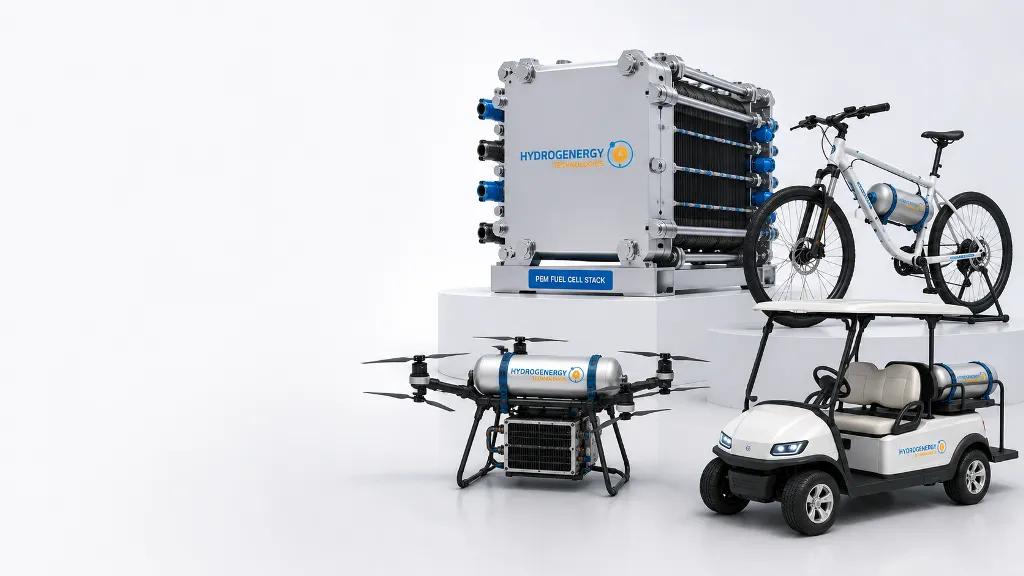
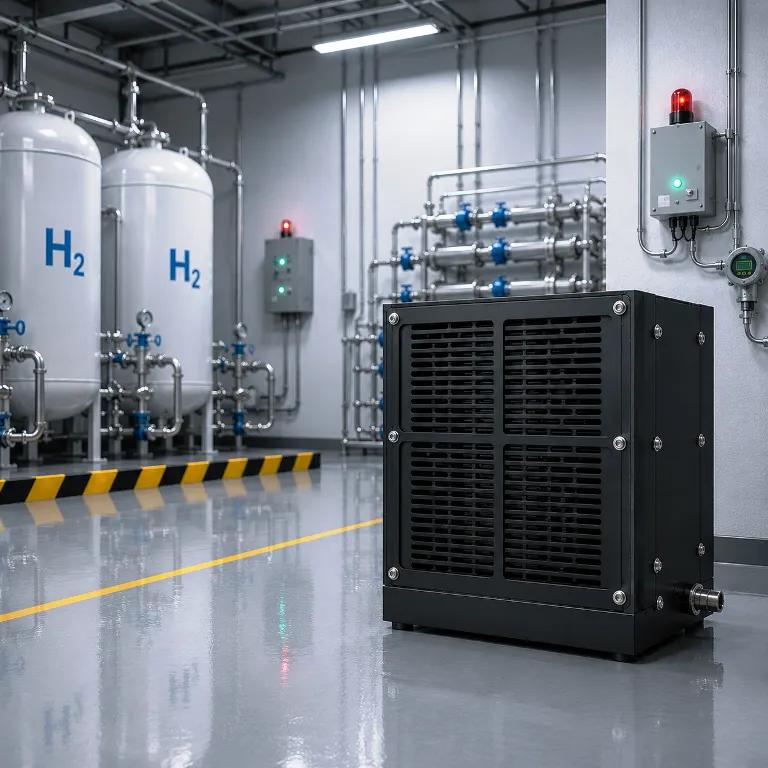
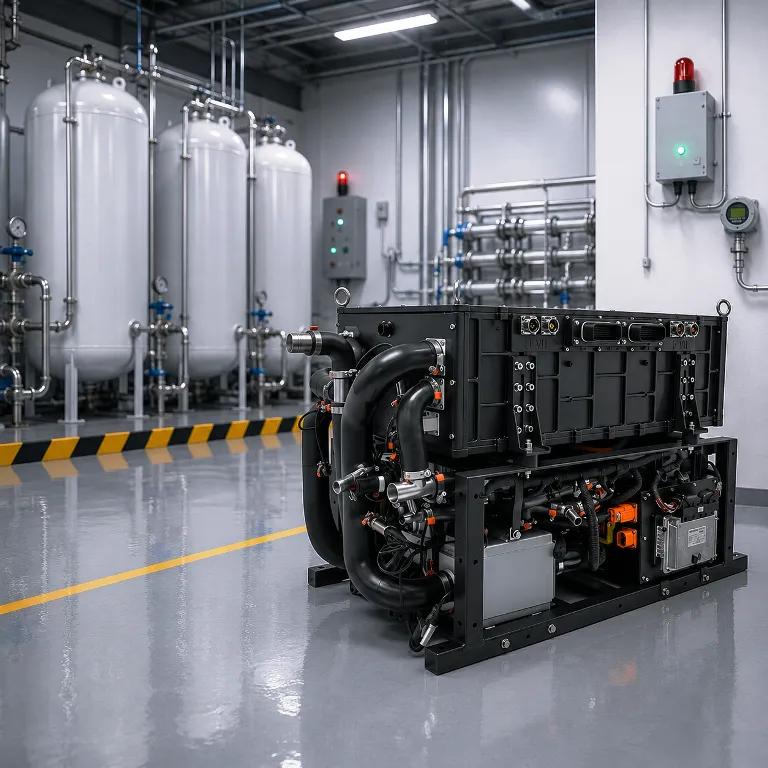
Fuel cells are available in two primary cooling configurations: air cooled, suited to lower power ranges where passive or fan-assisted cooling is sufficient; and liquid cooled, required for higher power stacks where active thermal management is necessary for sustained performance. Beyond stationary and research stacks, purpose-engineered fuel cell systems are available for drones, bicycles and hydrogen vehicles — each optimised for the weight, form factor and duty cycle of the target platform. Hydrogenergy supplies all five product lines with technical guidance for system integration.