H₂ Products

All Products
Electrolyzers
Fuel Cells
H₂ Leak Detectors
Dew Point Meters
Hydrogen Purity Analyzers
Mass Flow Controllers
Digital Pressure Gauges
MEA & Materials

Can't find what you need? We source custom components.

Custom Request →
dew point meters
H₂ Products · Dew Point Meters

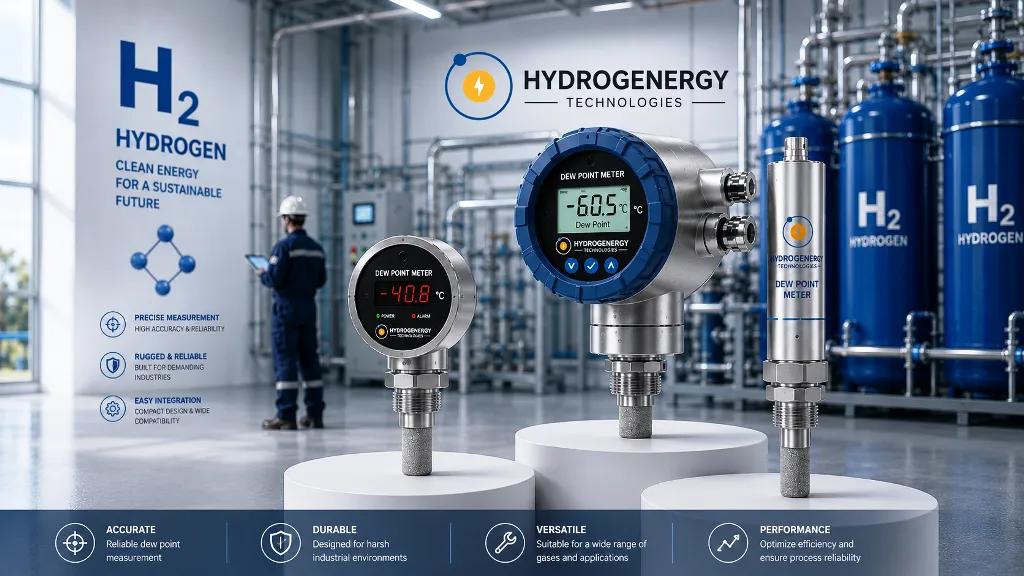
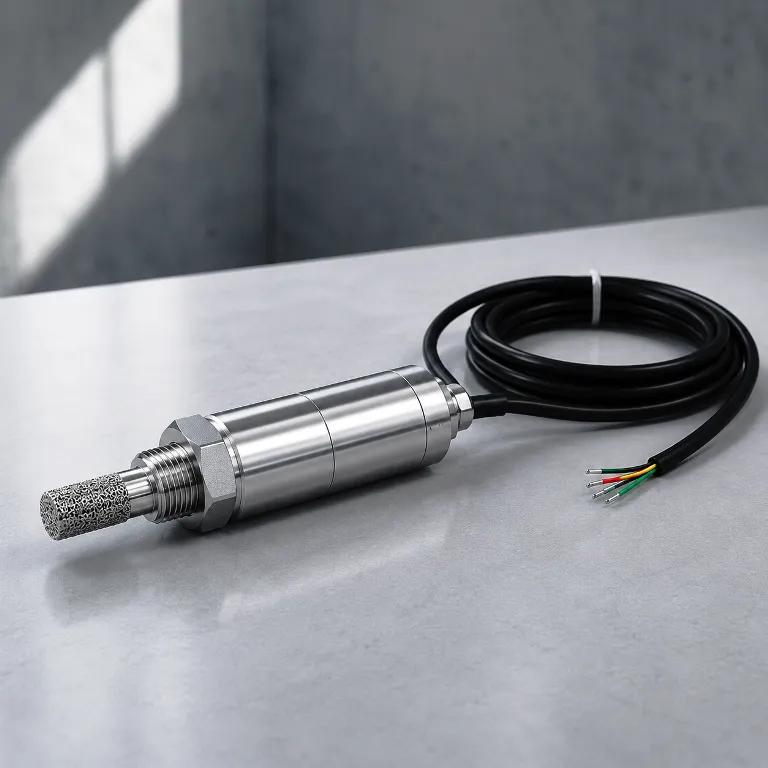
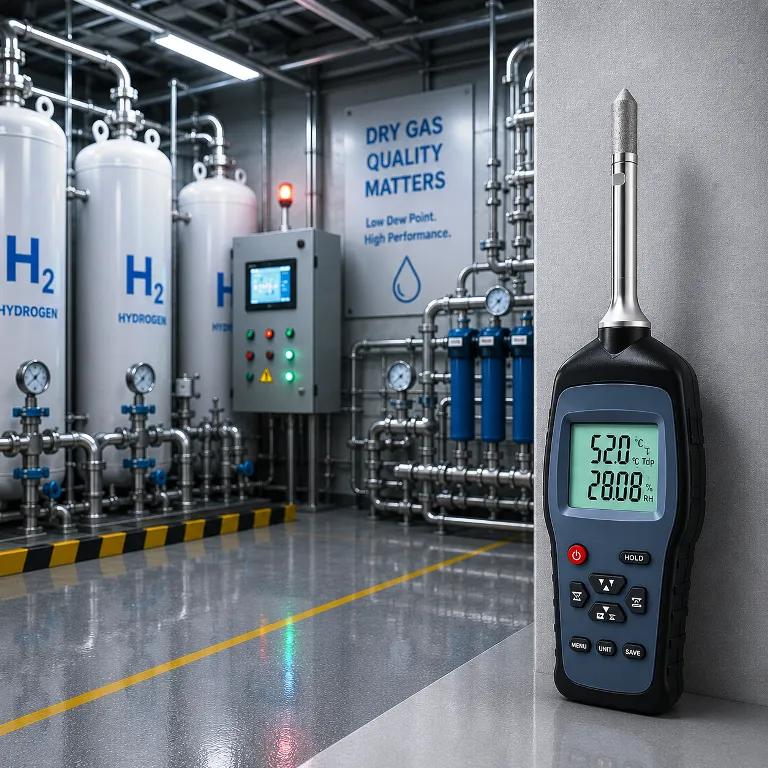
Dew Point Meters & Moisture Analysers

Portable · Fixed · Inline

Precision moisture measurement for hydrogen gas streams, compressed gas systems and industrial drying processes. Dew point meters for quality verification, process control and hydrogen purity validation — across portable, fixed and inline configurations.

What is a Dew Point Meter?

Measure moisture. Protect your hydrogen system.

A dew point meter is an instrument that measures the moisture content of a gas — expressed as a dew point temperature, the temperature at which water vapour in the gas would begin to condense. In hydrogen systems, moisture measurement is critical: water vapour in a hydrogen stream can degrade fuel cell membrane performance, compromise gas purity specifications, cause corrosion in storage and pipework, and introduce measurement error in downstream analytical instruments.

Dew point is the preferred unit of moisture measurement in gas applications because it is independent of temperature and pressure changes — unlike relative humidity, which varies with conditions. In hydrogen gas quality standards such as ISO 14687, moisture content is specified as a dew point temperature at a defined pressure, making a calibrated dew point meter the correct instrument for compliance verification.

Dew point meters are used at the outlet of electrolyzers and hydrogen generators to verify dryness after the desiccant dryer stage, at compression and storage interfaces to confirm gas quality before high-pressure storage, at fuelling station dispensers to validate hydrogen quality at the point of delivery, and inline in process gas systems where moisture control is a continuous process parameter. Hydrogenergy supplies dew point meters across portable, fixed-mount and inline configurations for the full range of hydrogen and industrial gas applications.

Which dew point meter is right for you?

Verification of hydrogen dryness at electrolyzer or generator outlet
Fixed or Inline Dew Point Meter — continuous monitoring at defined measurement point in the gas stream
Spot-check and field measurement of moisture across multiple points or systems
Portable Dew Point Meter — handheld, battery operated, suitable for survey and commissioning work
Continuous inline moisture monitoring for process control or quality assurance
Inline Dew Point Transmitter — 4–20mA or digital output for integration with process control systems
Hydrogen quality compliance verification per ISO 14687 or similar gas quality standards
Calibrated Dew Point Meter — traceable calibration, appropriate measurement range for the standard
Moisture monitoring in compressed air, nitrogen or other industrial gas systems
Portable or Fixed Dew Point Meter — suitable for non-hydrogen gas streams as well as hydrogen

Frequently asked questions

Why is dew point used instead of relative humidity to measure moisture in hydrogen?
Relative humidity is temperature-dependent — the same absolute moisture content gives different relative humidity readings at different temperatures. Dew point temperature is an absolute measure of moisture content that does not change with temperature or pressure variations, making it the correct and consistent unit for gas quality measurement. International hydrogen quality standards such as ISO 14687 specify moisture limits as dew point temperatures for this reason.
What dew point is required for hydrogen used in fuel cells?
ISO 14687 specifies a maximum moisture content of minus 40°C dew point (at line pressure) for hydrogen used in PEM fuel cells and hydrogen vehicles. For laboratory and research fuel cell applications, requirements vary by stack design and operating conditions — consult the fuel cell manufacturer's specification. Hydrogen from a PEM electrolyzer after drying typically achieves minus 60°C dew point or better.
Where in a hydrogen system should a dew point meter be installed?
The most critical measurement point is immediately downstream of the desiccant dryer at the electrolyzer outlet — confirming the dryer is performing and hydrogen meets the required dryness specification before entering storage or downstream equipment. Additional measurement points include the inlet to high-pressure compression, the dispenser outlet at fuelling stations, and any point in the system where moisture ingress or dryer breakthrough could occur.
What is the typical measurement range of a hydrogen dew point meter?
Dew point meters for hydrogen applications typically measure from minus 80°C to plus 20°C dew point, covering the full range from very dry pipeline-quality hydrogen to near-saturated gas. Instruments intended for ultra-dry gas verification — such as at electrolyzer outlets — should have a lower range of at least minus 60°C. Confirm the instrument range matches your expected dew point before specifying.
Can a dew point meter be used for gases other than hydrogen?
Yes — dew point meters measure moisture in any gas stream and are widely used with compressed air, nitrogen, argon, natural gas and other industrial gases. The sensor technology is gas-agnostic in most designs, though some sensor materials may be affected by specific gas contaminants. Confirm compatibility with your gas composition with Hydrogenergy before specifying for non-hydrogen applications.
Need help choosing?
Our engineers will recommend the right dew point meters for your application.
Talk to an Engineer →