H₂ Products

All Products
Electrolyzers
Fuel Cells
H₂ Leak Detectors
Dew Point Meters
Hydrogen Purity Analyzers
Mass Flow Controllers
Digital Pressure Gauges
MEA & Materials

Can't find what you need? We source custom components.

Custom Request →
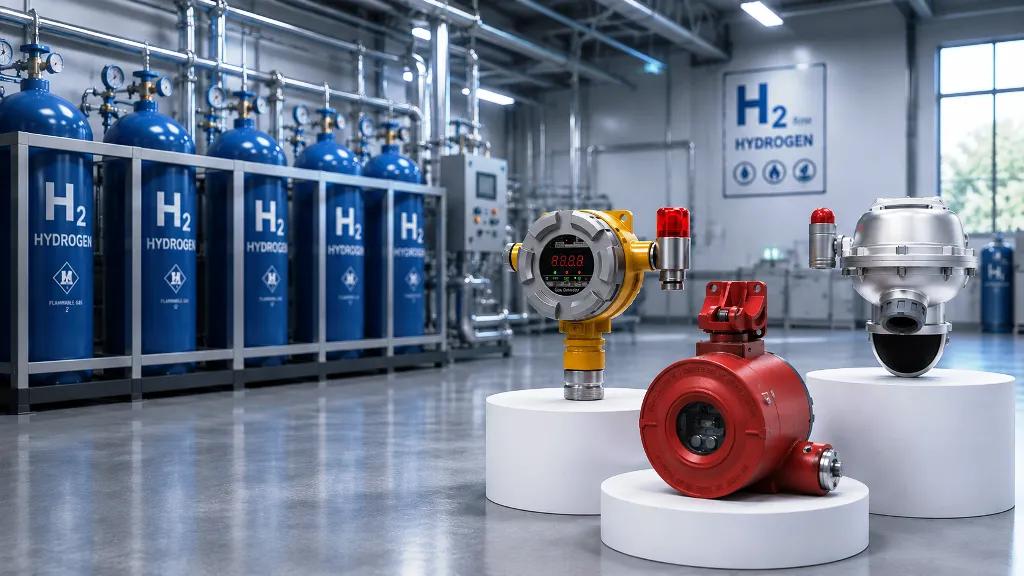
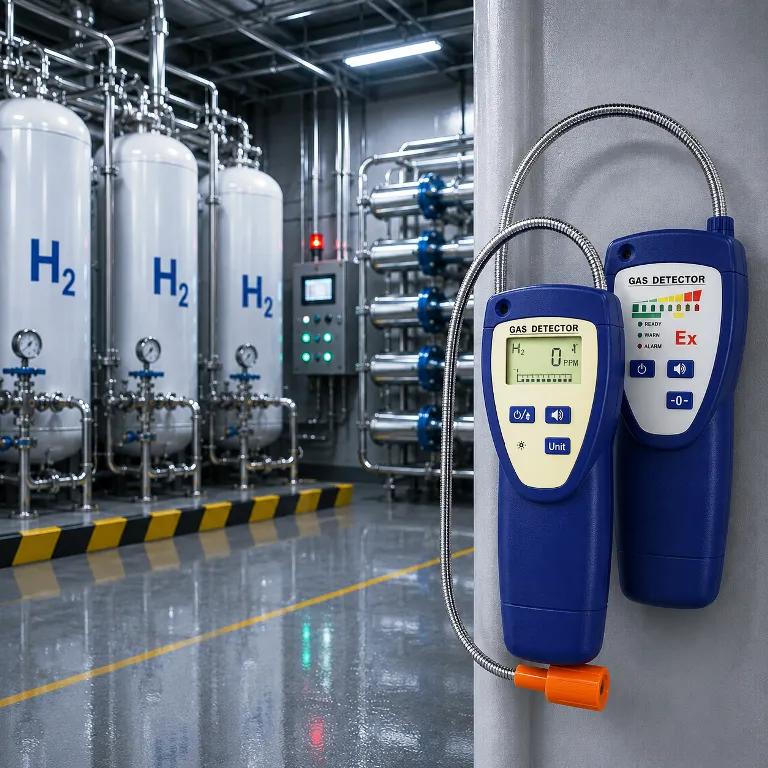
Leak detectors in hydrogen lab
H₂ Products · H₂ Leak Detectors

Hydrogen Leak Detectors

Catalytic · Electrochemical · Flame · Ultrasonic

Fixed and portable hydrogen leak detection for industrial facilities, hydrogen fuelling stations, test stations, storage installations and safety validation. Four detection technologies — catalytic bead, electrochemical, flame and ultrasonic — for every application and hazardous area requirement.

What is a Hydrogen Leak Detector?

Detect early. Prevent failure. Protect operations.

A hydrogen leak detector is an instrument that continuously monitors the surrounding atmosphere for the presence of hydrogen gas — triggering an alarm when concentration exceeds a defined threshold, before levels reach flammable or explosive limits. Hydrogen's wide flammability range (4–75% in air) and extremely low ignition energy make early leak detection a critical safety requirement in any facility handling hydrogen.

Leak detectors are deployed at hydrogen generation points, storage areas, compression and filling stations, pipework junctions, valve assemblies, test enclosures and fuel cell installations — anywhere hydrogen could accumulate if containment is breached. Fixed detectors provide continuous area monitoring; portable detectors are used for inspection, commissioning, maintenance and fault-finding.

Four detection technologies are commercially available, each operating on a different physical or electrochemical principle and suited to different concentration ranges, environmental conditions and hazardous area classifications. Selecting the right detector depends on the hydrogen concentration range to be monitored, the environment (indoor, outdoor, explosive atmosphere), required response time, and whether point detection or open-path monitoring is needed. Hydrogenergy supplies all four technologies with technical guidance for detector selection, placement and system integration.

Which h₂ leak detector is right for you?

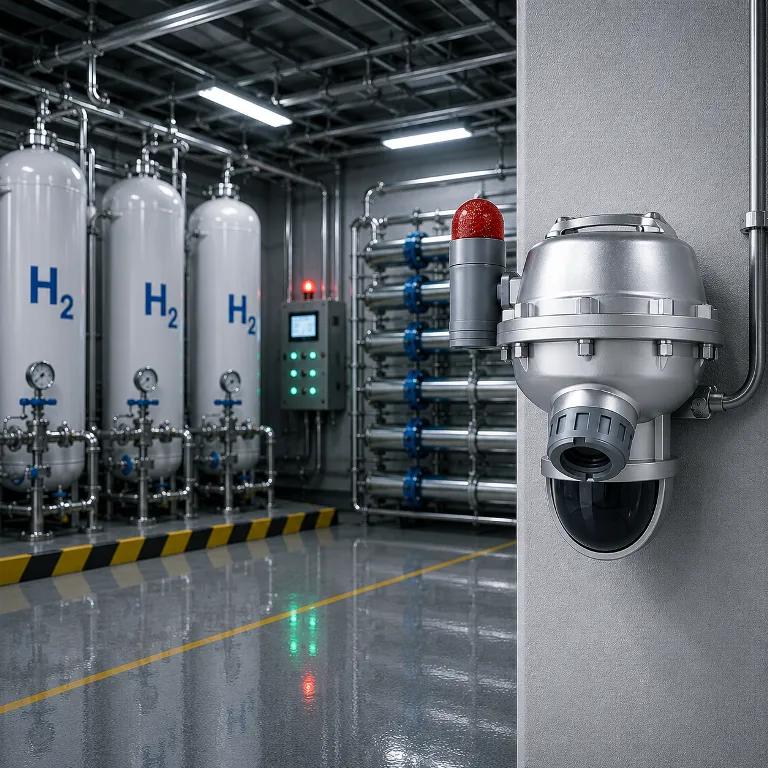
Continuous area monitoring for low-level hydrogen concentration in enclosed spaces
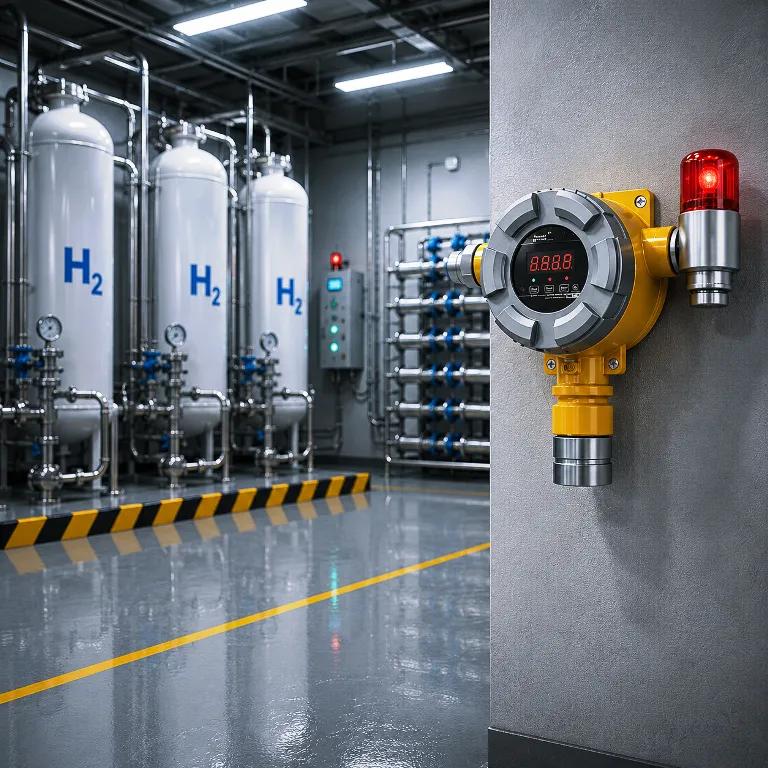
Catalytic Bead Detector — detects 0–100% LEL, robust, widely used in industrial hydrogen safety
High-sensitivity point detection at low PPM concentrations for precision safety monitoring
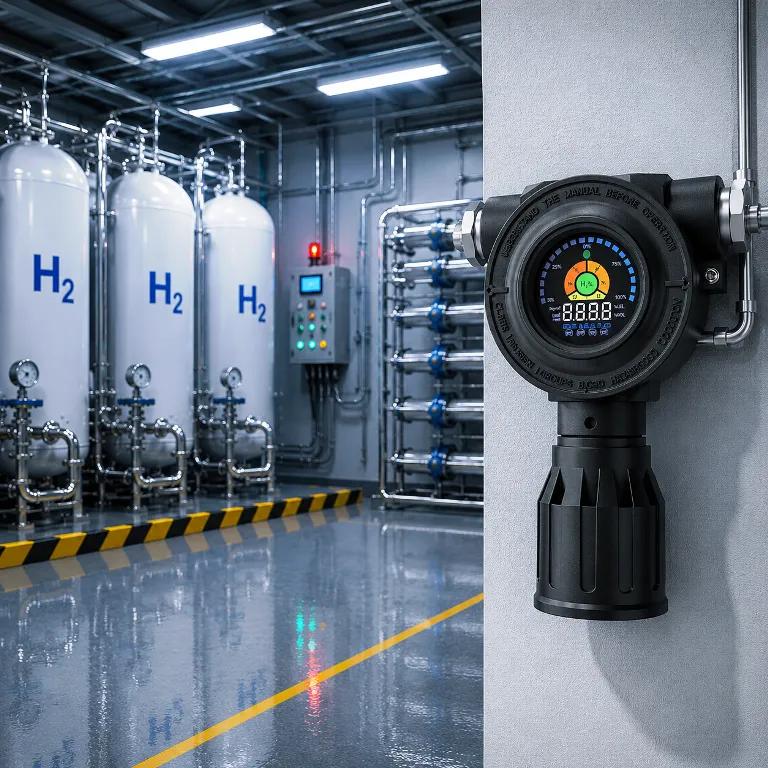
Electrochemical Leak Detector — electrochemical cell, accurate at low concentrations, low power
Detection of hydrogen flames where ignition has already occurred — flame presence confirmation
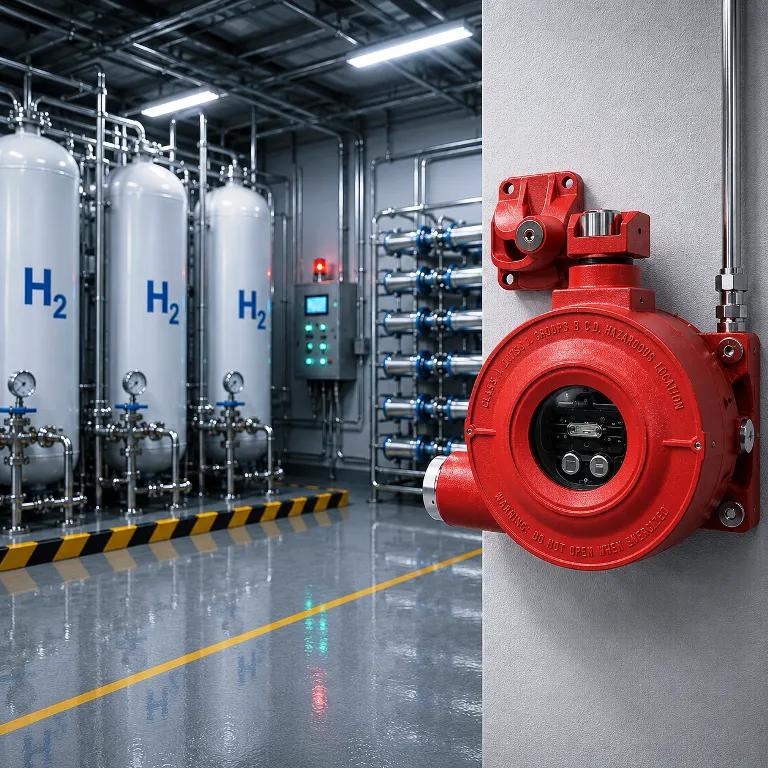
Hydrogen Flame Detector — UV/IR detection of hydrogen flames, used in high-risk process areas
Non-contact leak detection on pressurised pipework, valves and fittings without shutdown
Ultrasonic Leak Detector — detects ultrasonic signature of pressurised gas escape, no gas sampling required
Portable inspection and leak survey during commissioning or maintenance
Electrochemical or Ultrasonic Detector — handheld formats available for point-and-check field use
Hazardous area installation requiring ATEX or IECEx certified detection
Catalytic Bead or Electrochemical Detector — certified variants available for Zone 1 and Zone 2 areas

Frequently asked questions

What is the difference between catalytic bead and electrochemical hydrogen detectors?
Catalytic bead detectors measure hydrogen concentration as a percentage of the Lower Explosive Limit (LEL) — typically 0–100% LEL — making them well suited for area safety monitoring where the concern is flammable concentration buildup. Electrochemical detectors operate at lower concentration ranges, often measuring in parts per million (PPM), and are better suited for precision monitoring where early detection at very low concentrations is required. The two technologies complement each other in comprehensive hydrogen safety systems.
What is a hydrogen flame detector and when is it used?
A hydrogen flame detector identifies the presence of an active hydrogen flame using ultraviolet (UV) or combined UV/IR sensing — hydrogen flames are invisible to the naked eye and produce no visible light, making optical detection essential. Flame detectors are used in high-risk process areas, hydrogen fuelling forecourts, and outdoor installations where a leak-to-ignition event must be detected immediately to trigger suppression or emergency shutdown systems.
How does an ultrasonic leak detector work?
Pressurised gas escaping through a leak generates high-frequency ultrasonic sound — typically in the 38–40 kHz range — inaudible to humans but detectable by a sensitive ultrasonic sensor. Ultrasonic leak detectors identify this acoustic signature without needing to sample the gas, making them ideal for non-contact inspection of pressurised hydrogen pipework, cylinders, valves and fittings while the system remains in operation.
Where should hydrogen leak detectors be positioned?
Hydrogen is significantly lighter than air and rises rapidly — detectors should be positioned at high points in enclosed spaces, near ceiling level, and at the top of enclosures housing hydrogen equipment. At outdoor installations, detectors should be placed close to potential leak sources such as valve clusters, regulator assemblies and connection points. Detector placement should follow applicable safety standards and site-specific risk assessment.
Can hydrogen leak detectors be used in hazardous areas?
Yes — certified variants of catalytic bead and electrochemical detectors are available with ATEX and IECEx certification for use in Zone 1 and Zone 2 explosive atmospheres. Always verify the detector's certification, installation category and approved wiring method against the hazardous area classification of your installation before specifying. Hydrogenergy can advise on appropriate certified products for your site classification.
Need help choosing?
Our engineers will recommend the right h₂ leak detectors for your application.
Talk to an Engineer →