H₂ Products

All Products
Electrolyzers
Fuel Cells
H₂ Leak Detectors
Dew Point Meters
Hydrogen Purity Analyzers
Mass Flow Controllers
Digital Pressure Gauges
MEA & Materials

Can't find what you need? We source custom components.

Custom Request →
Catalytic Bead Detectors
Productsleak detectorsCatalytic Bead Detectors

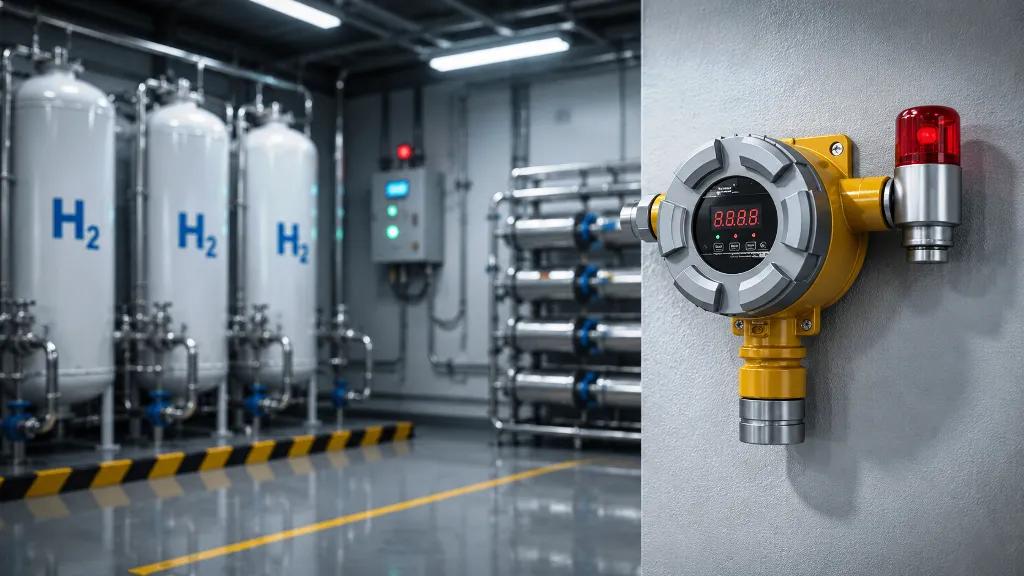
Catalytic Bead Hydrogen Detectors

0–100% LEL · Fixed· Point Detectors

Catalytic bead hydrogen detectors for continuous area monitoring of flammable hydrogen concentrations. Robust, widely deployed technology measuring 0–100% of the Lower Explosive Limit — suited for industrial facilities, storage areas and hazardous zone installations.

Products being added to this category.

Enquire directly →

What is a Catalytic Bead Detector?

A catalytic bead detector measures flammable gas concentration by detecting the heat released when hydrogen oxidises on a catalyst-coated sensing element. The sensor contains two matched beads — one coated with a catalyst that promotes hydrogen oxidation, the other inert as a reference. When hydrogen is present, oxidation on the active bead raises its temperature and electrical resistance relative to the reference bead. This resistance difference is measured and converted into a gas concentration reading, typically expressed as a percentage of the Lower Explosive Limit (LEL).

Catalytic bead detectors are the most widely deployed gas detection technology in industrial safety applications — proven, robust, and effective across a 0–100% LEL measurement range. They respond to combustible gas concentration directly, making them well suited for area monitoring where the safety concern is flammable gas accumulation rather than trace-level leak detection.

Catalytic bead sensors require oxygen to function, as the detection mechanism relies on catalytic oxidation. They are not suitable for inert or oxygen-deficient atmospheres. Sensor elements have a finite operational life and require periodic calibration and bump testing to confirm continued accuracy. Hydrogenergy supplies catalytic bead detectors in both fixed and portable configurations for industrial hydrogen safety applications.

Applications

Hydrogen storage and generation area monitoring
Industrial facility safety systems
Compression and filling station leak detection
Fixed area gas monitoring
Inspection and leak survey
Hazardous area gas detection (ATEX/IECEx zones)

Frequently asked questions

What is LEL and why is it used for catalytic bead detectors?
LEL stands for Lower Explosive Limit — the minimum concentration of a gas in air that can ignite. For hydrogen, the LEL is 4% by volume. Catalytic bead detectors express readings as a percentage of LEL because this directly indicates how close the atmosphere is to a flammable concentration, regardless of the specific gas being measured. A reading of 100% LEL means the atmosphere has reached the minimum flammable concentration — alarm thresholds are typically set well below this, often at 10–25% LEL.
Do catalytic bead detectors require oxygen to function?
Yes. Catalytic bead detection relies on catalytic oxidation of the target gas on the sensing element — this reaction requires oxygen to be present in the atmosphere. In oxygen-deficient or inert environments, catalytic bead detectors will not function correctly and may give false low readings. For monitoring in inert atmospheres, an alternative detection technology such as thermal conductivity or infrared should be used.
How often do catalytic bead sensors need to be calibrated?
Catalytic bead sensors typically require calibration every 3–6 months, with bump testing (functional verification with a known gas concentration) recommended more frequently — often monthly in critical safety applications. Sensor response can drift over time due to poisoning from contaminants such as silicones, sulphur compounds and halogenated hydrocarbons. Follow the manufacturer's calibration schedule and your site's gas detection maintenance procedure.
Can catalytic bead detectors be poisoned or damaged by contaminants?
Yes. Certain compounds — particularly silicones, sulphur-containing gases, and some halogenated hydrocarbons — can permanently poison or temporarily inhibit the catalytic surface, reducing sensor sensitivity or causing complete failure. If your installation environment may contain these contaminants, discuss alternative detection technology or sensor protection options with Hydrogenergy before specifying.
What is the difference between fixed and portable catalytic bead detectors?
Fixed detectors are permanently installed at a specific monitoring point, typically wired into a central alarm and control system for continuous, unattended monitoring. Portable detectors are handheld or wearable units used for spot-checks, leak surveys, confined space entry verification, and maintenance work. Most hydrogen safety installations use fixed detectors for continuous area monitoring supplemented by portable units for inspection and troubleshooting.
Need help choosing the right model?
Our engineers will recommend the right catalytic bead detectors for your application.
Talk to an Engineer →