Products being added to this category.
Enquire directly →What is an Ultrasonic Leak Detector?
An ultrasonic leak detector identifies gas leaks by detecting the high-frequency ultrasonic sound generated when pressurised gas escapes through a small opening — typically in the 38–40 kHz range, well above the range of human hearing. As hydrogen or any pressurised gas passes through a leak point, the turbulent flow creates ultrasonic acoustic energy that the detector's sensitive microphone picks up and converts into an audible or visual signal.
Unlike catalytic bead, electrochemical or other gas-sampling detection technologies, ultrasonic detection does not require the target gas to reach the sensor in any specific concentration — it detects the physical acoustic signature of the leak itself. This makes ultrasonic detectors uniquely suited to non-contact inspection: technicians can scan pipework, valve clusters, flange connections and fittings from a distance, without needing to position a sensor directly at the suspected leak point or wait for gas to accumulate.
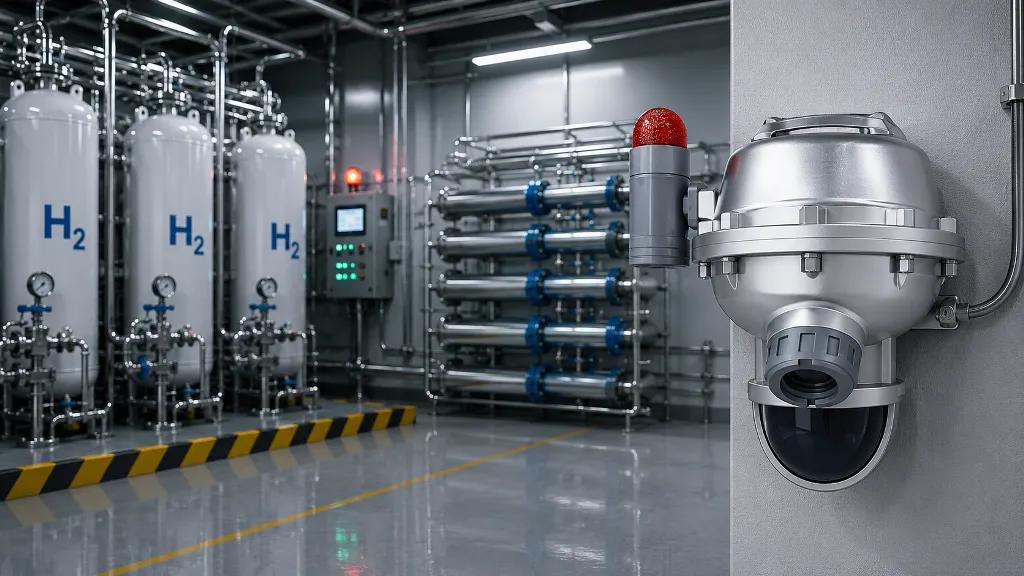
Because ultrasonic detection is gas-independent, it works equally well for hydrogen, compressed air, nitrogen, or any other pressurised gas — making it a versatile tool for facilities handling multiple gas types. Ultrasonic detectors are particularly effective for finding small leaks in high-pressure systems where escaping gas generates strong ultrasonic signals, even at leak rates too low to register on concentration-based detectors. They are widely used for system inspection while equipment remains in operation, avoiding the cost and disruption of a shutdown. Hydrogenergy supplies ultrasonic leak detectors for non-contact inspection of pressurised hydrogen systems.