H₂ Products

All Products
Electrolyzers
Fuel Cells
H₂ Leak Detectors
Dew Point Meters
Hydrogen Purity Analyzers
Mass Flow Controllers
Digital Pressure Gauges
MEA & Materials

Can't find what you need? We source custom components.

Custom Request →
MEA and GDL
Productsmea materialsGas Diffusion Layer

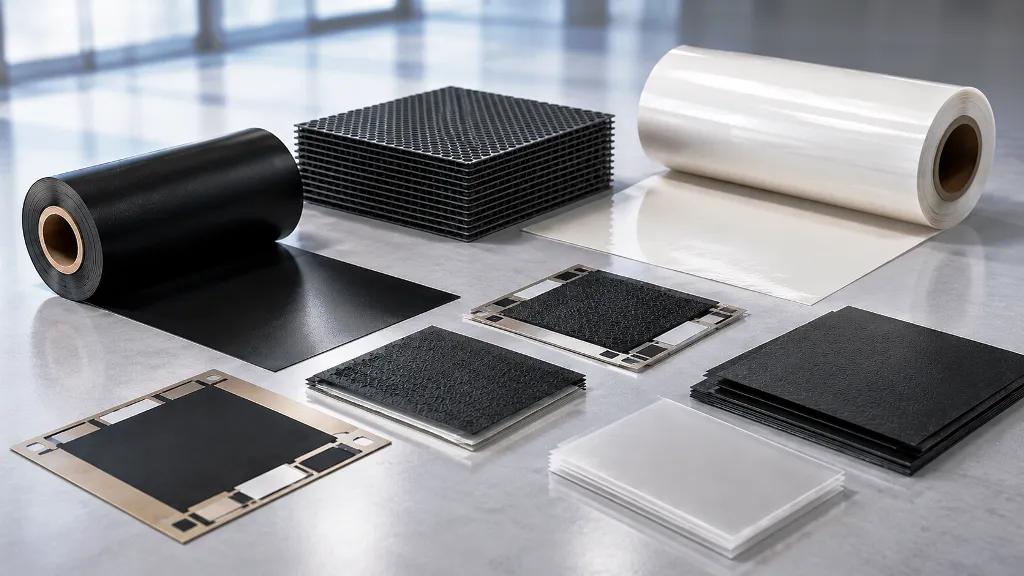
Gas Diffusion Layers (Carbon Paper)

Hydrophilic · Hydrophobic · Custom Size

Carbon paper gas diffusion layers for PEM fuel cell and electrolyzer stack assembly. Hydrophilic and hydrophobic treatments, single or double-sided microporous layer options, and custom dimensions for MEA manufacturing and stack development.

Products being added to this category.

Enquire directly →

What is a Gas Diffusion Layer?

A gas diffusion layer (GDL) is a porous, electrically conductive carbon paper positioned between the bipolar plate and the catalyst layer in a PEM cell. It performs three essential functions: distributing reactant gases uniformly across the catalyst surface, conducting electrons between the catalyst layer and bipolar plate, and managing water transport — removing product water from the cathode in a fuel cell, or managing liquid water flow in an electrolyzer.

GDL surface treatment is application-specific. Hydrophobic treatment (typically PTFE-based) is standard for fuel cell cathode GDLs, promoting efficient water removal and preventing flooding that would otherwise block gas access to the catalyst layer. Hydrophilic GDLs are used in specific electrolyzer and water management configurations where liquid water transport through the GDL is required rather than rejected.

A microporous layer (MPL) — a thin coating of carbon and PTFE applied to one or both faces of the GDL — improves contact resistance with the catalyst layer and further refines water management characteristics. Hydrogenergy supplies GDL carbon paper in hydrophilic and hydrophobic variants, with single or double-sided microporous layer options, custom-cut to your required dimensions for MEA assembly and stack manufacturing.

Applications

PEM fuel cell stack assembly
PEM electrolyzer stack assembly
Custom MEA manufacturing
GDL performance characterisation research

Frequently asked questions

What is the difference between hydrophilic and hydrophobic GDL?
Hydrophobic GDL (PTFE-treated) repels water, promoting efficient removal of product water in fuel cell cathodes to prevent flooding. Hydrophilic GDL allows water to pass through more readily, used in specific electrolyzer configurations and certain fuel cell anode applications where water transport behaviour differs from the cathode.
What is a microporous layer and why is it needed?
A microporous layer (MPL) is a thin carbon-PTFE coating applied to the GDL surface facing the catalyst layer. It reduces contact resistance, improves water management, and helps prevent catalyst layer cracking during MEA hot-pressing. Single-sided MPL is standard for most applications; double-sided is used in specific stack designs requiring symmetric water management.
Can GDL be custom cut to size?
Yes — Hydrogenergy supplies GDL carbon paper custom cut to your specific active area and stack dimensions, avoiding waste from standard sheet sizes for production-scale MEA manufacturing.
What thickness options are available?
GDL carbon paper is available in multiple thickness grades, affecting gas permeability, electrical resistance and mechanical compression characteristics. Thickness selection should be coordinated with your bipolar plate flow field design and target compression ratio. Contact Hydrogenergy for thickness recommendations for your stack design.
Does GDL choice affect fuel cell performance?
Significantly. GDL properties — porosity, hydrophobicity, MPL configuration and thickness — directly affect mass transport limitations at high current density, water management and overall stack efficiency. GDL selection should be optimised alongside catalyst, membrane and flow field design for best stack performance.
Need help choosing the right model?
Our engineers will recommend the right gas diffusion layer for your application.
Talk to an Engineer →